Cat Hydration Guide: How to Prevent Kidney Issues in Cats
Published Date:
Cats have a low thirst drive due to their evolutionary history as desert animals. In the wild, they obtained most of their hydration from raw prey. However, a diet primarily consisting of dry kibble combined with low water intake can lead to chronic dehydration, putting cats at high risk for feline lower urinary tract diseases (FLUTD) and chronic kidney disease (CKD).
Why Cats Are Naturally Prone to Under-Hydration
Domestic cats descend from the African wildcat, a species adapted to arid environments where free-standing water was scarce. Their ancestors evolved to extract nearly all the moisture they needed from prey animals, which are roughly 70% water, and developed highly concentrated urine as a water-conservation mechanism. This evolutionary legacy means a modern house cat’s thirst signal simply doesn’t activate as readily as a dog’s or a human’s, even when their actual hydration needs aren’t being met by a dry-food-only diet.
The consequence is that chronically mild dehydration can persist for years without obvious symptoms, slowly increasing the concentration of minerals in the urinary tract and placing extra workload on the kidneys to filter blood with less fluid to work with. By the time CKD becomes detectable through routine bloodwork, a cat has often already lost a significant portion of kidney function, since kidneys have substantial reserve capacity that masks early decline. Ensuring your cat stays hydrated is one of the most effective and lowest-cost ways to protect their long-term kidney function.
Step-by-Step Solution: Practical Hydration Strategies
Step 1: The Power of Wet Food
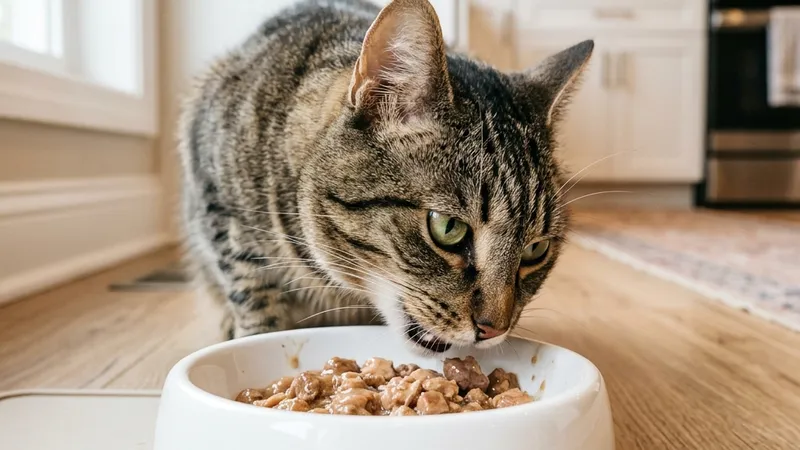
Standard dry kibble contains only 6–10% water, whereas wet canned food contains 70–80% moisture. Simply introducing wet food into your cat’s daily diet can double their total water consumption without your cat needing to actively seek out more water on their own. Offer a mix of wet and dry food (karma feeding) to increase overall moisture intake while still providing the dental and convenience benefits some owners value in kibble.
Step 2: Moving Water Fountains
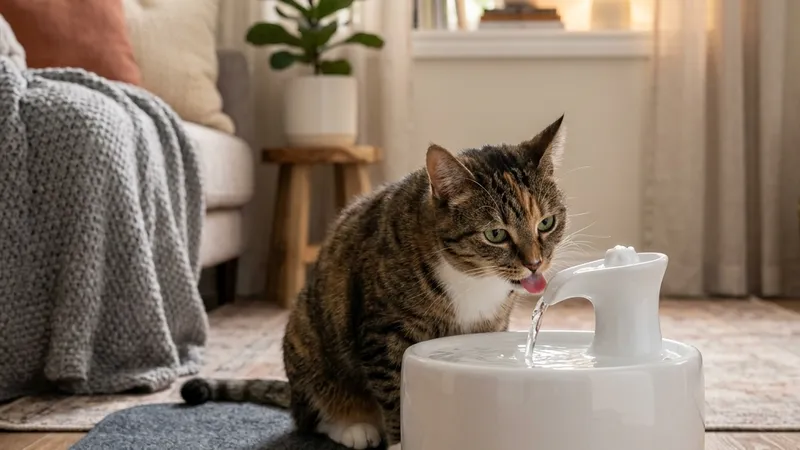
Cats are instinctively attracted to running water because, in nature, still water is more likely to host bacteria and signal stagnation, a survival instinct that persists even in a perfectly clean home water bowl. Invest in a pet water fountain. The continuous bubbling sound and movement will entice them to drink more, and many owners report a noticeable increase in their cat’s interest in water within days of introducing one.
Step 3: Bowl Placement and Material
Cats dislike drinking water that is placed directly next to their food bowl or litter box, an instinct linked to avoiding contamination near a food or waste source in the wild. Separate food and water stations by at least a few feet, ideally in different rooms. Avoid plastic bowls, which absorb odors and bacteria over time and can develop a film that deters drinking; use ceramic, glass, or stainless steel instead.
Step 4: Strategic Water Station Placement
Beyond a single bowl, place multiple water sources throughout the home, cats are more likely to drink consistently when water is conveniently available wherever they spend time, rather than requiring a trip across the house. This is especially important in multi-level homes or multi-cat households where one cat may be deterred from approaching a shared bowl.
Prevention: Catching Kidney Issues Early
Since early CKD often shows no visible symptoms, routine senior wellness bloodwork, typically recommended annually starting around age 7, or every 6 months for cats over 10, is the most reliable way to catch declining kidney function before it becomes severe. Combine this with daily observation of litter box habits, since changes in urine volume or frequency are often the first home-visible sign that something has shifted internally.
It’s also worth tracking water intake more deliberately than most owners do by default. Refilling a bowl daily without measuring makes it nearly impossible to notice a gradual decline in how much your cat is actually drinking, since the bowl always looks roughly the same. Measuring out a known volume each morning and checking how much remains at day’s end, even loosely, once a week, gives you an early baseline to compare against if your vet later asks whether thirst has changed.
When to Seek More Help or Watch for Edge Cases
Increased thirst combined with increased urination, weight loss despite normal appetite, or lethargy are classic warning signs of developing kidney disease and warrant prompt veterinary bloodwork rather than waiting for the next scheduled checkup. Cats that have already been diagnosed with CKD often need a prescription renal diet alongside hydration strategies, since standard hydration tips alone aren’t sufficient once kidney function has measurably declined. Dehydration can also compound with other conditions, a cat already managing dental pain may reduce both food and water intake together, and a cat experiencing separation anxiety may avoid normal eating and drinking routines during stressful periods, so addressing those underlying issues often improves hydration as a secondary benefit.
Quick Summary
- Cats evolved with a naturally low thirst drive, making chronic mild dehydration easy to miss.
- Wet food can double water intake compared to dry kibble alone.
- Running water fountains tap into a cat’s natural preference for moving water.
- Separate food, water, and litter stations, and avoid plastic bowls.
- Place multiple water sources throughout the home, especially in multi-level or multi-cat households.
- Annual senior bloodwork catches kidney decline before symptoms appear.
- Increased thirst, increased urination, or unexplained weight loss are red flags needing a vet visit.
Frequently Asked Questions
How much water should a cat drink per day?
A healthy cat typically needs about 50–60 ml of water per kilogram of body weight daily, including moisture from food. A cat eating primarily wet food may drink visibly less from the bowl since much of that need is already met through diet.
What are the earliest signs of chronic kidney disease in cats?
Early CKD is often silent, but subtle signs can include slightly increased thirst, marginally larger urine clumps in the litter box, or a small, gradual decline in coat quality, all easy to miss without routine bloodwork comparison over time.
Does switching a cat entirely to wet food guarantee they won’t develop kidney disease?
No single dietary change guarantees prevention, since kidney disease can have genetic, infectious, or age-related causes unrelated to hydration. However, consistent hydration meaningfully reduces one major risk factor and supports overall urinary tract health.
Why won’t my cat drink from a water fountain even though cats are supposed to like them?
Some cats are sensitive to fountain noise, motor vibration, or filter material taste. Try a different fountain style (gravity-fed versus pump-based), clean it more frequently, or place it in a quieter location before concluding your cat dislikes it.
Can dehydration in cats be reversed once it starts affecting the kidneys?
Mild, chronic dehydration is generally reversible with consistent hydration improvements. However, once kidney tissue damage has occurred from prolonged CKD, that specific damage is typically permanent, which is why early prevention matters more than late-stage correction.
Track Your Pet’s Hydration with Pati!
Want to keep track of your cat’s hydration, food intake, and clinical symptoms? Download the Pati app. Our advanced pet health log lets you monitor daily water levels and log vet visits easily. Download Pati App Now and keep your pet thriving!